
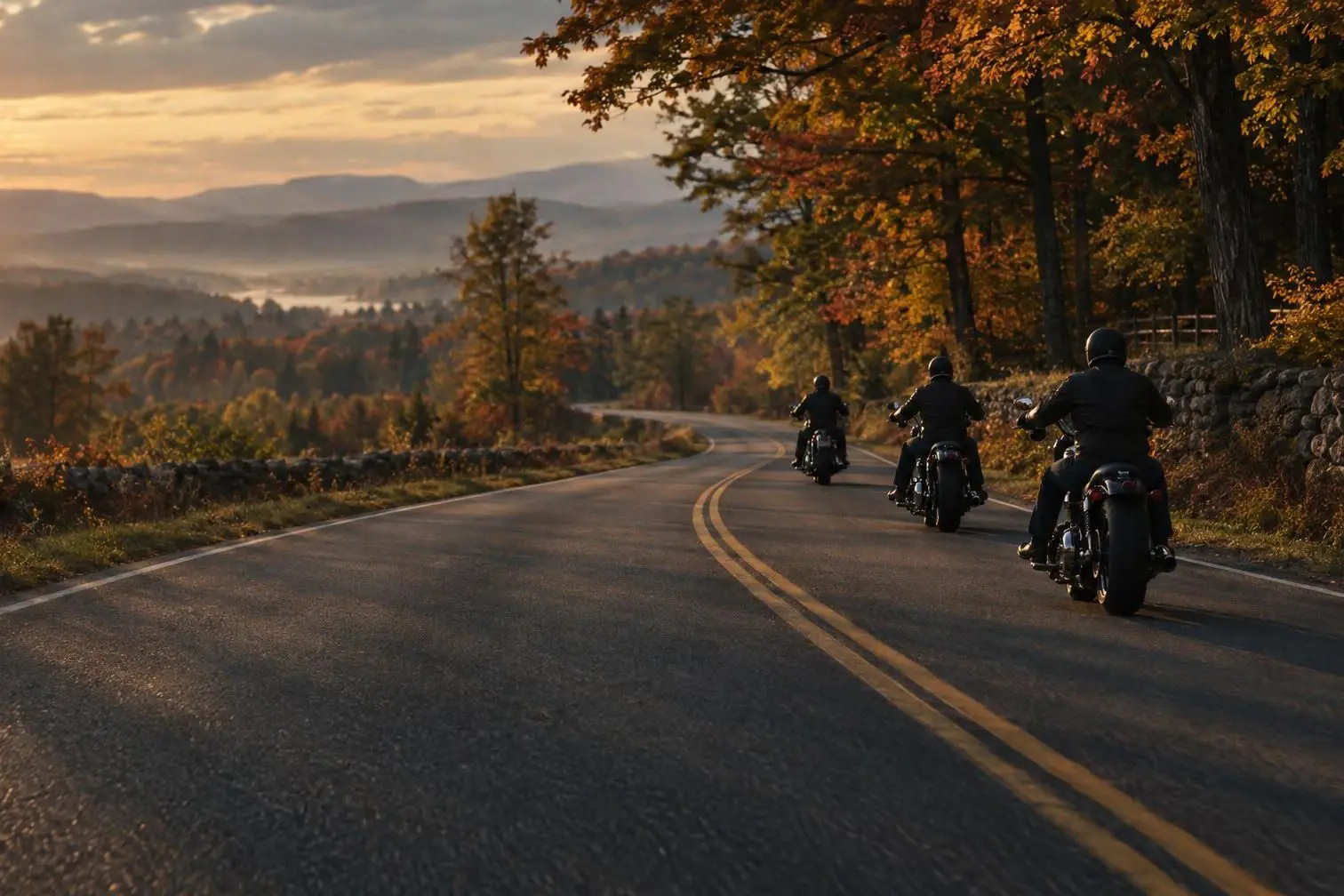
How do you ride safely in a group or solo in Connecticut and the Hudson Valley?
Ride staggered on open roads and single file on tight curves, keep a two-second gap to the rider ahead, and agree on a plan before you roll. Riding solo, tell someone your route and fuel up early. Watch for deer, wet leaves, sand and fast traffic, and wear full gear every time.
The Northeast gives riders some of the best roads in the country and some of the trickiest conditions. Here is how we think about riding it well, whether you roll out with six friends or alone with a full tank.
These are general tips, not a substitute for training. A Motorcycle Safety Foundation course is one of the best things you can do for your riding, no matter how long you have been out there.
How should a motorcycle group ride in formation?
On open roads with enough room, groups ride in a staggered formation. The lead rider takes one side of the lane, usually the left third, and the next rider takes the opposite side, usually the right third, with the pattern repeating down the line. The aim is space: a cushion in front of every rider and an escape route if something happens.
Gaps matter more than the pattern. Common guidance says to stay at least two seconds behind the rider directly ahead of you and at least one second behind the rider in the other half of the lane. Treat "at least" seriously, and fall back farther in curves, wet conditions or heavy traffic.
Go single file when the road narrows, on tight curves, on gravel, and when entering or leaving a highway. Re-form the stagger once you are clear, and let faster or newer riders set the pace rather than the other way around.
What should a group agree on before the ride starts?
Five minutes at the start of the day saves a lot of trouble on the road. Cover these points out loud:
- The route and the stops. Where you are going, where you will fuel, and where you will regroup. Share it in writing so nobody has to follow blindly.
- Fuel range. The shortest tank sets the schedule. Fill up before the group needs it, not after.
- Hand signals. Agree on the basics: single file, staggered, slow down, stop, hazard in the road, and fuel.
- Lead and sweep. A steady rider up front and an experienced rider at the back who can notice if someone drops off.
- If someone gets separated. Everyone pulls over at the next safe place and waits. Nobody races to catch up.
- Ride your own ride. Nobody should feel pushed past their comfort. The group moves at the pace of the least experienced rider.
How do you ride solo safely?
Solo days are great for clearing your head, and they come with one extra rule: you are your own backup. Tell someone your route and when you expect to be back. Charge your phone, download an offline map, and fuel up before the tank gets low. Take breaks before you need them, since fatigue sneaks up on you in the last hour of a long day.
Make yourself easy to see. Use your headlight, wear bright or reflective pieces, and stay out of other drivers' blind spots. Ride well inside your own limits, because there is nobody beside you to help if you push past them.
What road hazards come up in Connecticut and the Hudson Valley?
The landscape that makes riding here so good also creates specific problems. Learn them and they stop being surprises.
- Deer. They are everywhere on wooded roads, especially at dawn and dusk. Scan the shoulders, slow down in the dark, and never swerve hard for one.
- Wet leaves in fall. Leaves on shaded corners are as slippery as ice, and they hide potholes. Slow before the corner, not in it.
- Sand and salt in spring. Winter leaves grit in corners and on shoulders for weeks. Ease into your first rides of the season.
- Foliage traffic. Popular roads like US 7 along the Housatonic, Route 301 through Fahnestock State Park and Routes 44/55 up the Shawangunk Ridge fill up with drivers looking at the view. Go early and leave extra space.
- Fast parkway traffic. The Taconic State Parkway has a posted limit of 55 mph, but many drivers go faster. Keep a wide cushion and plan your exits early.
- Hikers on Route 9D. Near the Breakneck Ridge trailhead, hikers walk beside the road and cars pull over without warning. Slow down and expect the unexpected.
- Narrow historic roads. Roads like Storm King Highway in the Hudson Highlands are narrow and winding. Ride them slowly and check for closures first.
Want a local read on a specific area? Our ride guides cover 14 towns across Connecticut and the Hudson Valley, with seasonal notes for each.
What gear should you wear on every ride?
All the gear, all the time. That means a helmet, eye protection, a jacket with armor, gloves, long pants and sturdy boots that cover the ankle. Dress in layers, since mountain and river-valley mornings can be much cooler than the afternoon.
On the law: Connecticut requires helmets for riders under 18, and New York requires them for all riders. Laws change, so check the current rules for where you ride. Whatever the law says, we wear a helmet.
Off the bike, that is another story. The coffee stop and the parking lot are where a hoodie, a tee or a beanie belongs. See the gear built for that part of the ride.
What is the one habit that makes the biggest difference?
Look farther ahead than feels natural. Most trouble on a motorcycle starts well before you reach it: a driver edging out of a side street, a car drifting toward the line, a dark patch on the road ahead. The earlier you notice, the more options you have. Pair that habit with space, and you will stay ahead of most of what the road throws at you.
Ride safe, ride kind, and wave at the next rider you pass.